Recently I’ve been talking to some new people at baby and toddler groups, mostly because my child insists on minesweeping her way around the plates at snack time. As I am physically unable to have a conversation without shitting all my brain thoughts out of my mouth, I’ve ended up mentioning that I have fibromyalgia.
There have been a lot of blank looks.
Which is understandable. Until I found out I had it, my knowledge of fibro was exclusively derived from the odd Facebook infographic. I thought everyone with the condition had constant and excruciating pain all over the body all the time, and that was about the sum total of my awareness. It’s a misconception that I think a lot of people have, if they’ve heard of it at all.
So allow me, as someone who’s had their entire life turned upside down by it over the past two and a half years, to give you a brief introduction to fibromyalgia.

What is Fibromyalgia?
Fibromyalgia is a long-term illness with no cure. It has many symptoms, but the main ones are widespread pain (of varying types), chronic fatigue and cognitive issues (memory problems and “brain fog”). You might also find yourself with fun and exciting problems like restless legs, irritable bowels, and an inability to regulate body temperature properly. The latter is the reason you’ll see me draped in wet cloths in summer, looking like Kate Bush in the music video for Wuthering Heights.
Nobody really knows what causes fibromyalgia, only that it can be triggered by physical or mental trauma like surgery, serious injury or grief. Mine came on after a terrible induction, 40+ hours of labour and an emergency caesarean section.
Because it’s so nebulous, diagnosis can be a long and frustrating journey.
I was pretty fortunate in that mine was relatively uncomplicated. Oh, it took nearly a year, but compared to some people who get bounced around multiple different departments of their local hospital it was pretty straightforward process,.
Within a few weeks of my daughter arriving in 2020 I was having intense fatigue and pain in my knuckles. I had blood tests for thyroid problems, haemoglobin, any and all deficiencies – they all came back clear and my GP informed me “there may be nothing medical science can do for [me]”.
Which isn’t what you want to hear when you’re so exhausted you can’t stand up and hold your newborn at the same time. Like, can you try passing me through a hole in a standing stone or something?

Months later I went back after having several days where I physically couldn’t get off the couch. I had the same battery of blood tests done and I was completely expecting the doctor to announce that my haemoglobin levels were abysmal, shove some iron tablets at me and send me on my merry way. When I regurgitated my battery of symptoms, what he did instead was poke and prod at various spots on my body – the base of my neck, my upper arms, my thighs – and ask me if any of them were painful. Spoiler alert: yes. It felt like he was doing some very localised punching rather than gently applying pressure.
He told me based on the pressure point test it was almost certain I had fibromyalgia, handed me a prescription for painkillers and recommended pacing myself.
I had been expecting pills or supplements of some sort that would make me feel normal again. It took me a long time to come to terms with the fact that not only was that not going to happen, my entire life was going to have to be different.
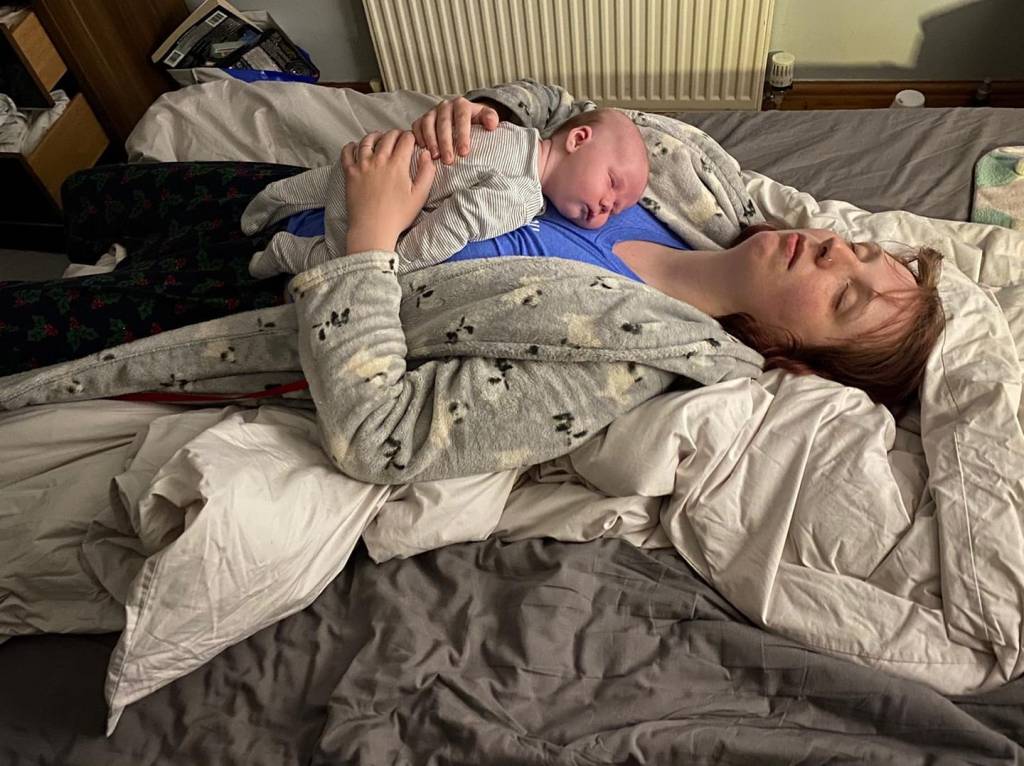
In some ways, I feel quite lucky. There are people with fibro who live with severe pain and a cocktail of medication and painkillers every day – I only have to break out the good shit if I’ve really overdone it.
The fatigue, on the other hand, is brutal. It comes without warning and takes away everything I’ve got – my energy, my ability to think straight, the power to do anything. It makes me feel nauseous and shivery. It’s beyond anything I’ve ever experienced before; the tiredness I felt from lack of sleep with a newborn doesn’t even compare. There are no pills or medical miracles for that – believe me, I’ve asked.
But more than anything else, it’s left me with an enormous burden of guilt. I rely heavily on other people every day. I constantly have to weigh up whether doing something fun with my child will incapacitate me to the point I’m struggling. Doing necessary housework sometimes means sacrificing a trip to the park.
It’s harder, physically and mentally, than I can put into words. I’m not the mother I wanted to be. I wasn’t expecting to have to learn to be a parent and learn to be chronically ill at the same time. As my daughter gets older and the joys and challenges become different, I have to get the hang of it all over again.
It’s lonely. It’s demoralising. It’s a fine line to have to walk every day. I frequently step off it without meaning to.
Every day I hold her hand and do the best I can and hope that it’s enough.

 Chronic Mother